
There is a particular kind of book you find before you know what you are looking for. You are twelve, maybe thirteen, and the library shelf gives it to you almost by accident. Years later you still remember the weight of it in your hands, the feeling of the mountain village, the particular quality of the silence in the quarry. Princess Academy was that book for a lot of readers. It turns twenty this year, and the question worth asking is not whether it was good. The question is why it still holds.
The Book That Wasn’t Supposed to Last
When Princess Academy won a Newbery Honor in 2006, Shannon Hale became the first Utah author to receive that distinction. It was a quiet, somewhat unlikely book to be celebrated that way — no dragons, no chosen one, no sweeping prophecy. A girl from a mountain village. A quarry. A school convened for dubious reasons by a distant kingdom. The story did not announce itself as important.
And yet it has sold over a million copies and been translated into more than twenty-five languages. A 20th anniversary deluxe edition arrived in July 2025, with a new cover by Dung Ho, sprayed edges, and a letter from Hale to her readers. A graphic novel adaptation is due in April 2026. This is not the trajectory of a book that was merely liked. This is a book that people kept.
What Miri Understood
The heart of the story is not the academy or the prince. It is Miri’s realisation that she has been underestimating herself — and that the people around her have, too. She spends much of the book trying to earn a place she already deserves, trying to prove worth she already has.
That particular ache is not unique to twelve-year-olds. If anything, it sharpens with age. Adult readers returning to Princess Academy often find that the book has more to say to them now than it did the first time. The pressures that shape Miri — the need to be useful, the fear of being a burden, the longing to matter in a place that seems to have decided otherwise — these do not go away when you grow up. They just wear different clothes.
On the Value of Rereading
There is a case to be made that the best children’s books are not really for children at all. They are written with a child in mind, but they carry enough truth that they outlast the reader’s childhood and wait patiently for them to return.
Rereading Princess Academy as an adult means noticing things that weren’t visible at twelve. The way the kingdom’s relationship to Mount Eskel is a small, precise study in how institutions exploit the people they claim to serve. The way Miri’s friendship with Britta is written with care and without competition. The way Hale refuses to let the romance be the point.
None of this is hidden. It was always there. The book just requires a little more life experience to see it clearly.
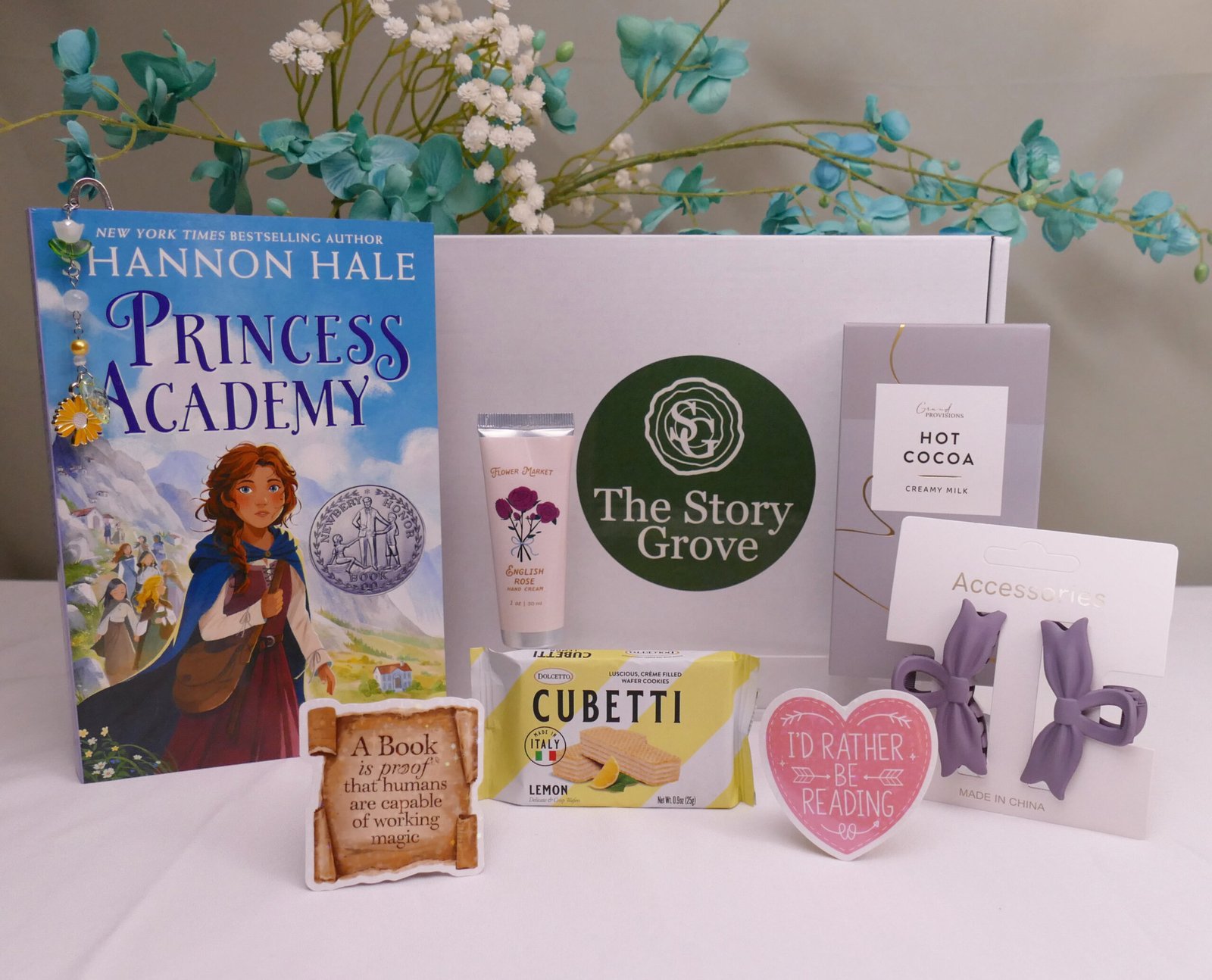
The Princess Academy Standard Story Box
A curated reading experience built around Shannon Hale’s 20th anniversary edition — including the new hardcover, hand-selected companion reads, and Story Grove curation notes. Available now in limited quantities.
Why Some Stories Age So Well
Shannon Hale has now written more than fifty books, including the Newbery Honor-winning graphic novel memoir Real Friends and the bestselling Ever After High series. She is a generous, thoughtful writer who has spoken openly about writing books for girls who are often told their stories don’t matter.
That intention is visible in Princess Academy. Miri is not waiting to be saved. She is learning to read. She is organising. She is negotiating. She is paying attention in a world that keeps asking her not to. The book honours that effort in a way that feels, twenty years on, not dated but necessary.
A story that tells a girl she is worth something — that her curiosity is an asset, that her community is worth fighting for, that she does not have to leave everything behind to become herself — does not expire. It compounds.